AI Agents in E-Commerce: How Autonomous Shopping Assistants Work
Online shopping is getting a new kind of customer, and it is not human. In 2026, AI agents crossed the line from recommending products to buying them. OpenAI and Stripe published the Agentic Commerce Protocol in September 2025 and switched on Instant Checkout inside ChatGPT. Google released its Agent Payments Protocol the same month. By late 2026, Meta’s Muse, Google’s Gemini Spark, xAI’s Grok Bot, and a wave of open source personal agents could search stores, compare options, and complete purchases with the shopper’s approval. An IBM study published in January 2026, run with the National Retail Federation across more than 18,000 consumers in 23 countries, found that 45 percent of shoppers already turn to AI somewhere in the buying journey.

This shift has a name, agentic commerce, and it changes the job of every online store. When the buyer is software, the storefront stops being a page for humans to browse and becomes an interface for machines to read. This article explains how autonomous shopping assistants actually work, the protocols that carry their payments, what changed in 2026, and what retailers and shoppers should do about it in 2027.
Share:
What an AI Shopping Agent Actually Does
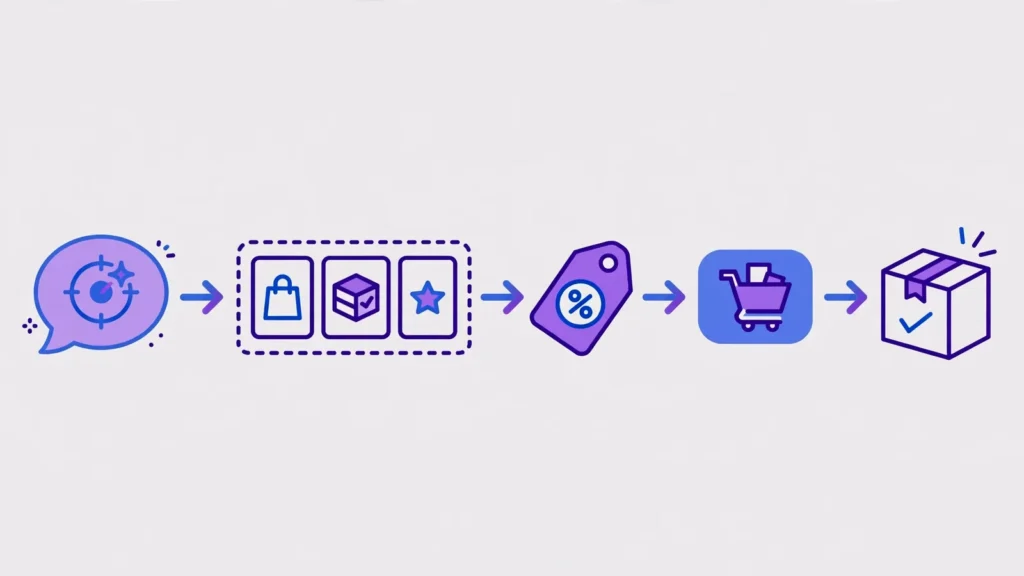
A shopping agent is not a chatbot with a product search box. It is an autonomous system that takes a goal, not a query, and works through the steps to reach it. You tell it something like “find running shoes under 120 dollars in my size, with good reviews, delivered by Friday.” The agent breaks that goal into a plan: search catalogs, filter by size and price, read reviews, check delivery dates, compare the finalists, and either present a shortlist or complete the purchase if you have given it permission and a spending limit.
Three traits separate an agent from an assistant. Autonomy means it takes steps without being prompted for each one. Reasoning means it weighs trade offs, for example choosing a slightly more expensive shoe that arrives two days earlier because your deadline matters more than the price difference. Interoperability means it works across systems that were never built to talk to each other, such as a retailer catalog, a payment provider, and your calendar. The agent is the layer that connects them.
In practice there are two kinds of shopping agent in 2027. Storefront agents live on the merchant’s own site: tools like Rep AI for Shopify stores, Zoovu for complex catalogs, and Constructor for enterprise retailers. They greet the shopper, ask what they need, narrow the options, and guide the decision to the cart. Personal agents live with the shopper: ChatGPT, Gemini, Meta’s Muse, and open source projects like OpenClaw, which runs on the user’s own computer and gained wide attention in January 2026. The storefront agent sells for one store. The personal agent shops across all of them. The tension between the two is one of the defining business stories of 2027.
The Plumbing: How Agents Pay Without Stealing Your Card

The hardest problem in agentic commerce was never the shopping. It was the paying. A human types a card number into a checkout form. An agent cannot do that safely, and nobody wants to hand their card details to a piece of software that browses the web on their behalf. The solution that emerged in 2025 and 2026 is delegated payments: the shopper authorizes a specific agent, for a specific merchant, up to a specific amount, and the agent carries a cryptographic token instead of card details.
Three open protocols now carry agent commerce. The Agentic Commerce Protocol, or ACP, published by OpenAI and Stripe on September 29, 2025, lets a merchant accept a delegated payment token and complete a checkout inside a chat conversation. Google’s Agent Payments Protocol, or AP2, released the same month, adds a signed mandate system so the shopper’s approval is cryptographically tied to the exact purchase, and Google handed AP2 to the FIDO Alliance, the industry body behind passkeys, on April 29, 2026. Google’s Universal Commerce Protocol, or UCP, brings a large retailer coalition together around a shared standard for agent readable catalogs and checkout.
Visa and Mastercard have added their own layers, giving merchants ways to tell a trusted agent apart from a scraper or a bot, and Cloudflare has built agent verification into its network. In October 2026, Meta and Sierra announced the Personal Agent Protocol, an open standard for how personal agents deal with businesses, with partners including Shopify, Stripe, and Walmart. The plumbing is no longer the bottleneck. The question in 2027 is who controls the relationship with the shopper: the agent, or the store.
What Changed in 2026: From Demo to Daily Use
The year 2026 turned agentic commerce from a conference topic into a product category. The timeline tells the story. In January, OpenClaw, an open source personal agent, drew wide attention, with add on skills including Shopify’s Shop that let it search products, check out, and track orders. In May, Google announced Gemini Spark, a 24/7 agent in the Gemini app that connects to services such as Instacart and asks before spending money. In June, Nous Research added Stripe skills to its open source Hermes Agent, with spending limits on every action.
The summer brought the consumer launches. In August, xAI’s Grok Bot started buying online for US users, using a single use Stripe Link card after the user approves each charge. In September, Meta launched Muse, a personal agent that searches retail sites and prepares a purchase for the shopper to approve, and OpenAI launched dots, always on agents that can buy with a card saved on a merchant’s website once the user approves. In October, Hark released Hark Pro, an assistant whose agent signs in to websites and makes purchases, asking first unless the user allows otherwise.
Not everything went smoothly. OpenAI’s Instant Checkout inside ChatGPT was rolled back toward discovery in March 2026, a reminder that shoppers are slower to trust agents with money than the launch announcements suggested. SAP’s Global Customer Loyalty Index 2026, a survey of 10,002 consumers in the US, UK, Germany, and Hong Kong, found that only 33 percent of consumers trust AI assistants to complete purchases on their behalf. The adoption gap is real: 45 percent use AI somewhere in the journey, but most still want the final click to be theirs. McKinsey puts the global opportunity at 3 to 5 trillion dollars by 2030, but the path there runs through trust, not technology.
How Agents Change the Store: The Machine Readable Shop
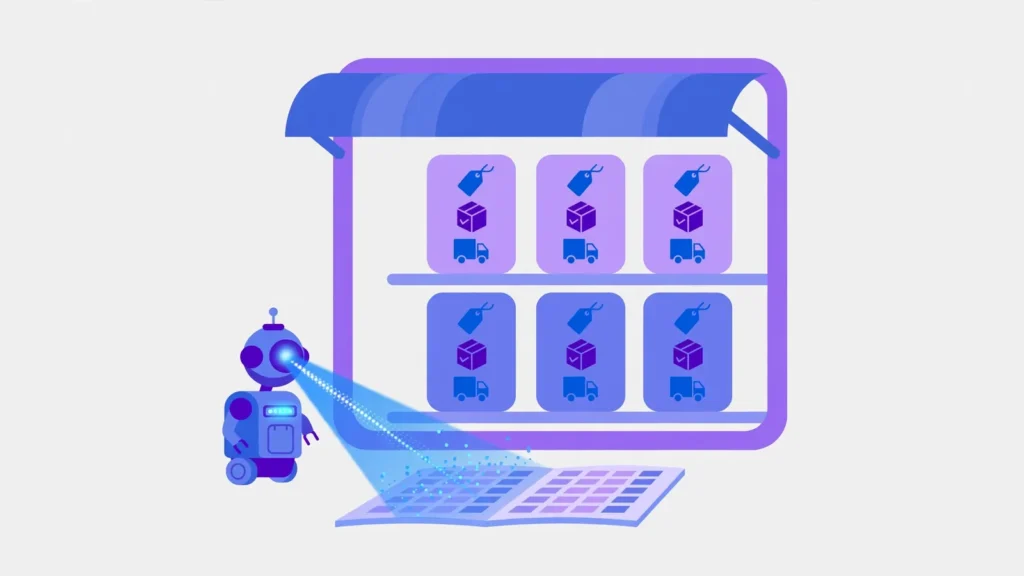
For retailers, the practical change in 2027 is that the catalog must be readable by machines, not just beautiful for humans. An agent does not admire your hero banner. It reads structured product data: price, availability, sizes, colors, shipping times, return policy, and reviews, ideally through a standard feed or API. Stores with clean structured data, clear pricing, and honest stock information will be the ones agents recommend. Stores with messy catalogs will be invisible to the fastest growing customer segment in e-commerce.
Shopify has moved fastest here, building agentic storefronts that expose catalogs to agents through standard protocols, and the major platforms are following. The work for a store owner in 2027 is concrete: publish complete product data, keep stock levels accurate in real time, state delivery dates honestly, and make your return policy machine readable. The search engine optimization of the last decade was about ranking for humans typing keywords. The new discipline is agent optimization: making sure an AI that has never seen your store can understand what you sell, what it costs, and whether it can arrive on time.
There is also a defensive side. Agents that scrape prices without buying, or that buy up limited stock, are a real problem, which is why agent verification matters. The retailers that do best in 2027 will be the ones that welcome verified agents with open data while blocking abusive bots, the same balance the web has struck with search engines for twenty years.
What Shoppers Should Know Before Letting an Agent Buy
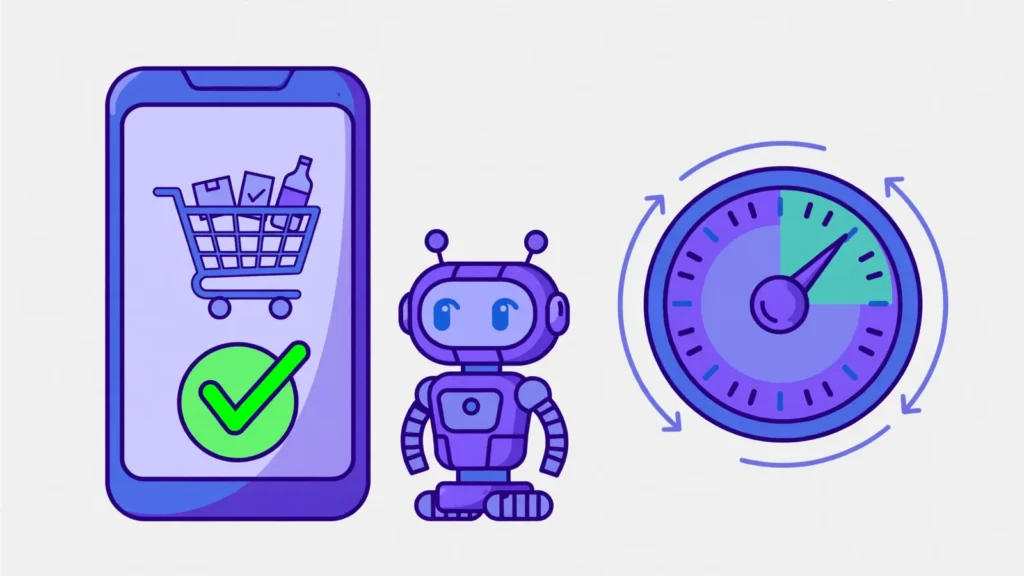
For shoppers, the advice is simpler than the technology. First, set spending limits. Every serious agent in 2027 supports per purchase and per month caps, and you should use them. Second, require approval for purchases above a threshold you choose, and keep it low until you trust the agent’s judgment. Third, check what the agent can see. A personal agent that connects to your email, calendar, and shopping apps is powerful precisely because it knows your context, and that context is sensitive data. Prefer agents that run locally, like OpenClaw, or that publish clear data policies, and be cautious about agents that ask for broad access without explaining why.
Fourth, remember that the agent’s recommendation is only as good as its incentives. An agent built by a retailer will recommend that retailer’s products. An agent that earns affiliate commission may rank commission paying products higher. Ask, or check, how your agent is paid. The independent personal agent, working for you and paid by you, is the model most likely to serve your interests, which is why the open source agent movement matters even for people who never install one.
Gartner predicts that AI agents will handle 40 percent of all retail customer interactions without human involvement by 2026, and that 33 percent of enterprise software applications will include agentic AI by 2028, up from less than 1 percent in 2024. Those numbers describe a shift that is already underway. The shoppers who learn to direct an agent well in 2027, clear goals, firm limits, and a habit of checking the shortlist before approving, will get the time savings without the surprises.
Frequently Asked Questions
What is agentic commerce?
Agentic commerce is shopping in which an AI agent acts for a person, within limits that person sets. The agent can search for products, compare them, and fill a cart. If the shopper allows it, the agent can also pay, using delegated payment tokens rather than card details.
How do AI shopping agents pay safely?
Through delegated payment protocols like the Agentic Commerce Protocol from OpenAI and Stripe, Google’s Agent Payments Protocol, and the Universal Commerce Protocol. The shopper authorizes a specific agent for a specific purchase up to a set amount, and the agent carries a cryptographic token, not the card number.
Do shoppers trust AI agents to buy for them?
Not yet, mostly. SAP’s 2026 survey of 10,002 consumers found only 33 percent trust AI assistants to complete purchases on their behalf, even though 45 percent already use AI somewhere in the buying journey, according to IBM and the National Retail Federation.
What should a store do to be ready for shopping agents?
Publish complete, structured product data with accurate prices, stock levels, delivery dates, and return policies. Make the catalog machine readable through standard feeds or APIs, and use agent verification to welcome trusted agents while blocking abusive bots.
Don’t Miss These, Explore More Topics