Robotics Meets Generative AI: Biggest Humanoid Breakthroughs This Year
Humanoid robots stopped being a demo category in 2026 and became a delivery schedule category. That is the honest summary of the year: machines that once only danced on stage are now sorting parts in car factories, moving totes in warehouses and folding towels in homes they have never seen before. The driving force is generative AI. Vision language action models, the same family of models that powers chatbots, now let a robot understand a spoken instruction, look at a messy room and work out what to do next.
The numbers from 2026 tell the story. Figure’s Helix 2.5 model lifted zero shot home task success from 9 percent to 56 percent across 30 unseen homes. Boston Dynamics and Hyundai announced a plan starting with 25,000 Atlas units across Hyundai and Kia plants. Unitree became the first humanoid maker to list on a mainland Chinese exchange, after shipping more than 5,500 humanoids in 2025. Agility unveiled Digit 5 with more than 300 million dollars in milestone conditioned orders. This article covers the biggest breakthroughs, with the deployments, the figures and the honest limits, as of November 2026. For the hardware behind it all, see our AI hardware innovations guide.
Share:
Figure Helix 2.5: The First Real Zero Shot Home Robot
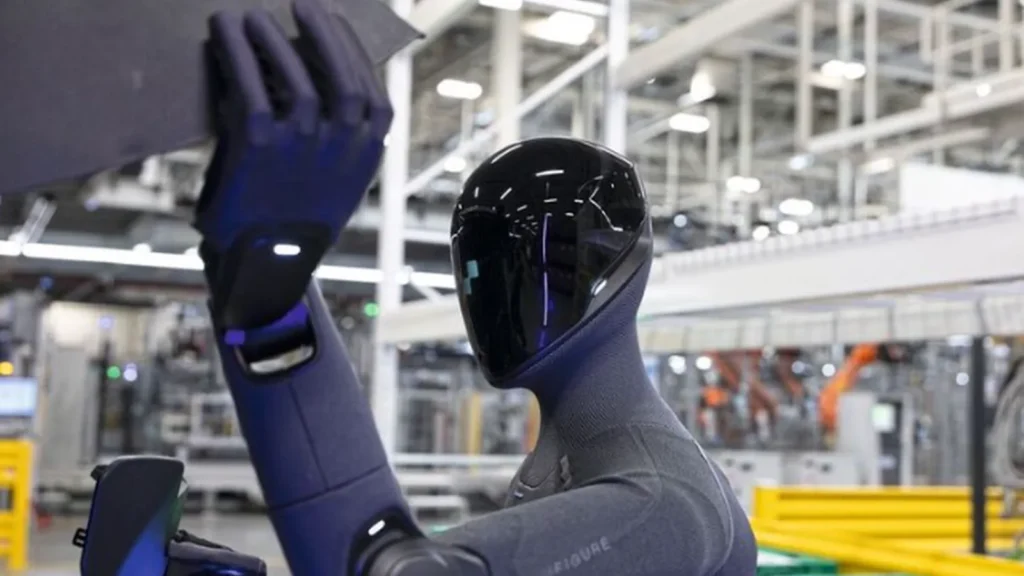
Figure AI’s Helix 2.5, published on September 17, 2026, is the most important software breakthrough in humanoid robotics this year. Helix is Figure’s vision language action model, the brain of its Figure 03 robot, and version 2.5 did something no humanoid had done publicly before: it completed whole body household tasks in homes it had never seen, with no data collected and no fine tuning in any of them. Figure rented 30 homes in the Bay Area and ran a single fixed policy checkpoint through three tasks: tidying 13 to 15 toys into a basket, folding towels into a basket, and making a bed with pillows placed and the comforter smoothed.
The results were 237 successes across 420 trials, or 56 percent overall. By task: bed making 67 percent, towel folding 62 percent and tidying 40 percent. The comparison Figure wants you to make is against the same architecture trained from scratch, which managed 9 percent. The difference is pretraining on Index, Figure’s dataset of first person human video, which the company says grows by 35 minutes of new experience every second from more than 90,000 weekly contributors. Figure also says Helix 2.5 matched its earlier Helix 02 performance with half the adaptation data.
The factory evidence is just as concrete. In an 11 month deployment at BMW Plant Spartanburg, Figure 02 logged more than 1,250 hours of runtime, loaded more than 90,000 parts and contributed to production of more than 30,000 X3 vehicles. Figure 03 itself launched on October 9, 2025, with cameras offering twice the frame rate, one quarter the latency and a 60 percent wider field of view than its predecessor, plus fingertip sensors that detect forces as small as three grams. In September 2026 Figure also announced a strategic partnership with Nscale covering up to 100,000 NVIDIA Vera Rubin GPUs, an initial 3.5 billion dollar compute commitment. The takeaway: Figure has the strongest combined evidence in the field, factory hours plus home generalisation, but 56 percent is still a research result, not a product. Figure is at figure.ai.
Tesla Optimus: Car Making Scale Meets Humanoid Robots
Tesla’s Optimus program is the most anticipated and the most secretive humanoid effort, and 2026 was the year it moved from stage demos to factory floors. Tesla confirmed in its first quarter 2026 earnings call that Optimus robots were performing real production tasks at the Fremont factory, primarily parts sorting and material transfer. By March 2026, reporting put more than 1,000 Optimus units at work sorting batteries, moving parts and doing basic inspection at Fremont and the Texas gigafactory.
The third generation hardware is a major step up. Optimus Gen 3 began mass production in January 2026 at the Fremont plant, on a line that once built the Model S and Model X, after Tesla stopped those two cars and converted the building into robot manufacturing. Gen 3 weighs 57 kg, 22 percent lighter than Gen 2’s 73 kg, and stands 173 cm tall. The hands are the big upgrade: 22 degrees of freedom per hand, double Gen 2’s 11, with 25 actuators per forearm and 50 across both hands, using tendon like drives that pull fingers from the forearm, mirroring human hand structure. Elon Musk has said Optimus contains about 10,000 individual parts, and that line speed depends on the slowest part.
Tesla’s real edge is a flywheel no other robot company can copy: millions of miles of Full Self Driving training teach spatial understanding, its Cortex supercomputers amplify it, and robots in its own factories feed real manipulation data back. The honest limit is that Optimus remains pre production for external customers: initial builds go to Tesla’s own operations, and Musk’s public timeline of 1 million units before 2030 is an ambition analysts remain sceptical about. Tesla has floated an eventual price of 20,000 to 30,000 dollars. The takeaway: watch Tesla’s factory deployments, not its timelines, because the factory is where Optimus is already proving itself.
Boston Dynamics Atlas: Hyundai Bets 25,000 Units
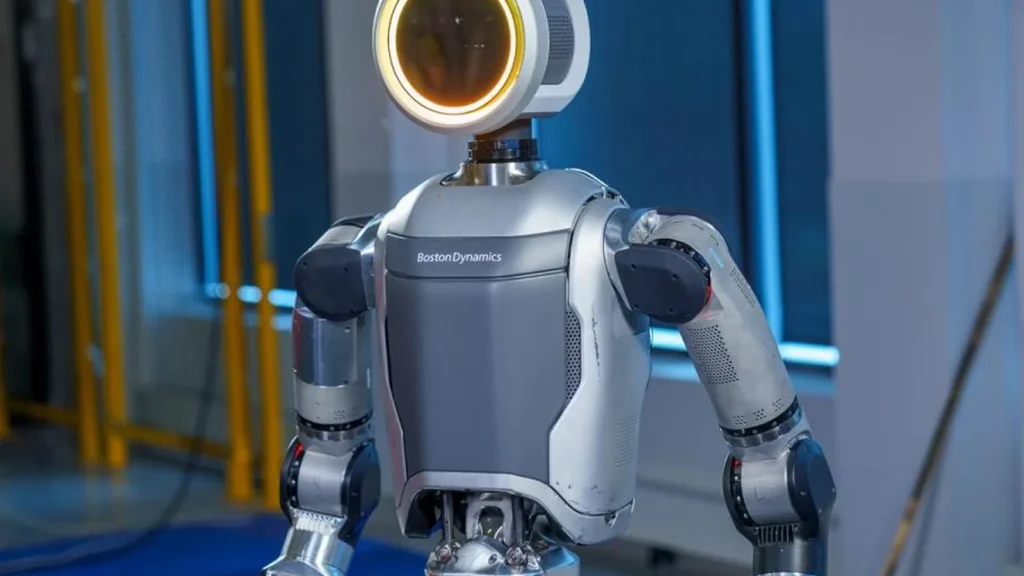
Boston Dynamics’ electric Atlas is the most physically capable humanoid in the field, and 2026 was the year it got a customer big enough to match it. The electric Atlas launched at CES on January 5, 2026, with all 2026 deployments already committed to Hyundai’s Robotics Metaplant Application Center and Google DeepMind, and more customers planned for early 2027. The product Atlas stands 1.9 m, weighs 90 kg, lifts 50 kg instantly and 30 kg sustained, and runs about 4 hours on a battery it can swap itself.
On September 21, 2026, Boston Dynamics opened the Robotics Metaplant Application Center inside Hyundai Motor Group Metaplant America near Savannah, Georgia. Atlas units there train on automotive parts logistics and sequencing: pulling parts out of shipping packaging, placing them in transport cubbies, two handed carries of large or off balance items, and grasps that respect cosmetic and fragile surfaces. Training combines teleoperation, reinforcement learning in simulation and handheld manipulation interface devices. The current floor is described as initial capacity, with a facility roughly ten times larger planned for 2027.
The headline number is Hyundai’s plan: parts sequencing on the line starts in 2028, component assembly by 2030, and 25,000 Atlas units across Hyundai and Kia plants over the coming years, supported by a US factory sized for 30,000 robots a year. That plan is a company stated intention, not audited deliveries, and Boston Dynamics’ own release notes the plans remain subject to technical validation and operational readiness. The takeaway: Atlas has the deepest physical capability and the largest named customer commitment, but the timeline runs to 2028 and beyond. Boston Dynamics is at bostondynamics.com.
Agility Digit 5: The Longest Work Record in the Field
Agility Robotics’ Digit has the longest commercial work record of any humanoid, and Digit 5, unveiled in September 2026, is the company’s bid to turn that record into scale. Digit 4 logged more than 65,000 hours of work before Digit 5 arrived, including deployments at Amazon fulfillment centers and GXO logistics sites, where Digit robots moved more than 100,000 totes. That is real production experience no competitor can match, and it shows in the order book: Digit 5 launched with more than 300 million dollars in milestone conditioned orders.
Digit 5 stands 1.81 m, weighs 129 kg, carries 22.7 kg, and runs 90 minutes on a charge with a 9 minute recharge. Early access is planned for the first half of 2027, with general availability guided for the end of 2027. Agility’s RoboFab facility is sized for up to 10,000 Digit robots a year. The company’s approach is deliberately narrow: Digit is a logistics worker, not a general purpose humanoid, and that focus is why it has the most hours on the job.
The honest limit is that the 300 million dollars in orders is milestone conditioned, meaning customers pay as Digit hits agreed performance marks, and general availability is still a year away. The takeaway: if you want evidence a humanoid can work a full shift in a real warehouse, Digit has the most of it. Agility is at agilityrobotics.com.
Unitree: The First Humanoid IPO and the Price Collapse
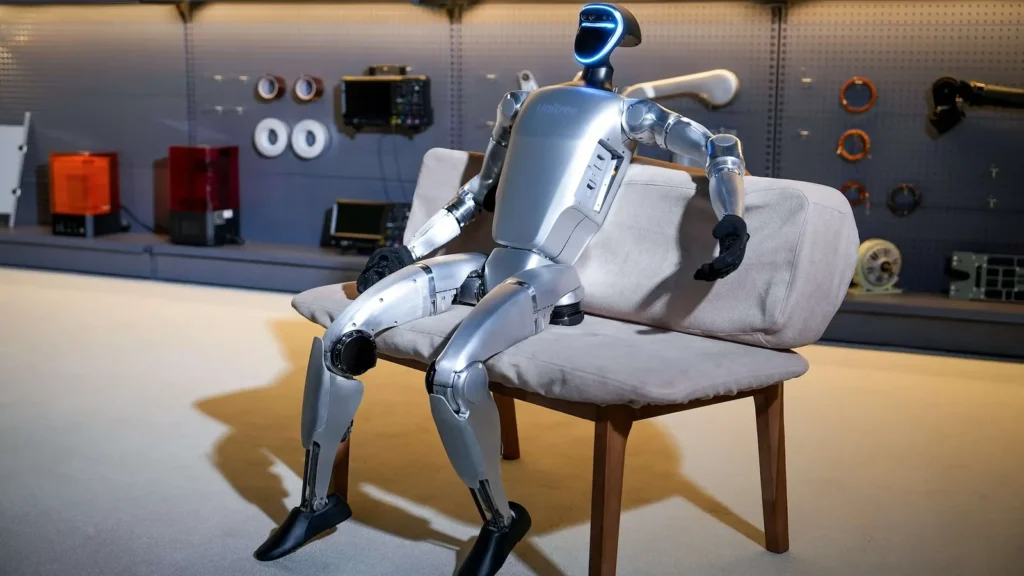
Unitree, the Hangzhou company founded by Wang Xingxing in 2016, did two things in 2026 no other humanoid maker has done: it shipped humanoids at consumer electronics prices, and it went public. Unitree’s store lists the R1 Air from 4,900 dollars, the R1 at 5,900 dollars, the G1 at 13,500 dollars and the full size H2 at 29,900 dollars, before tax and shipping. Its prospectus confirmed more than 5,500 humanoid robots shipped in 2025, ranked first globally, with humanoids bringing in 868 million yuan, about 52 percent of 1.7 billion yuan in 2025 revenue.
The IPO itself was a spectacle. Unitree listed on Shanghai’s STAR Market on August 19, 2026, ticker 688836, pricing at 150.80 yuan a share and raising about 6.1 billion yuan, roughly 904 million dollars. The shares closed the first day up 460 percent at a market value of about 50 billion dollars, with the retail book oversubscribed roughly 8,000 times. The stock has since pulled back hard, down about 55 percent from its peak by September to roughly 30 billion dollars, and Chinese regulators used informal guidance to slow the queue of humanoid listings behind it. In the first half of 2026, Unitree’s revenue was 1.152 billion yuan, up 48.54 percent, and its third quarter revenue reached 665 million yuan, up 69.93 percent year on year.
Unitree’s own prospectus names its weakness plainly: it spent little on robot brains and has not done large scale real world data collection or factory training. It is putting 2.022 billion yuan of IPO money, nearly half the raise, into AI models. In November 2026, Wang Xingxing said Unitree robots running OpenAI’s GPT 6 can paint pictures and play chess without prior training. The takeaway: Unitree proved humanoids can be manufactured and sold at scale, and now it must prove they can be smart. Unitree is at unitree.com. For the funding side of this story, see our biggest AI startup funding roundup.
Apptronik Apollo and the Rest of the Field
Beyond the big five, the field is deepening fast. Apptronik’s Apollo 2 is in development with backing from Google DeepMind, targeting manufacturing and logistics. 1X, the Norway born company now based in the US, is pursuing the home market with a softer, consumer focused design. XPeng commissioned what it calls the world’s first automated high order humanoid production line in 2026, with core process automation above 80 percent and its first IRON humanoid walking off the line unaided, with volume production targeted for the end of 2026. The International Federation of Robotics put 2025 humanoid sales at 7,000 units, most bought for research, which shows how early this market still is.
The funding picture matches the ambition. The Robot Report tallied 4.87 billion dollars of robotics funding in August 2026 alone. Figure’s latest round valued it at 39 billion dollars with more than 2.4 billion dollars raised, backed by OpenAI, Microsoft, NVIDIA and Jeff Bezos. NVIDIA’s role deserves a note of its own: its Isaac platform and GR00T models are becoming the shared software layer for many of these robots, and Figure’s Nscale deal for up to 100,000 Vera Rubin GPUs shows where the compute money is going.
The takeaway for readers is to rank robots by evidence, not by video. The honest leaderboard as of November 2026 is: Figure for factory plus home evidence, Agility for warehouse hours, Boston Dynamics for physical capability and customer commitment, Unitree for shipments and price, and Tesla for manufacturing scale potential. Every one of them still has something to prove.
What to Watch in 2027
Three things will decide the next year. First, general availability dates: Digit 5’s early access in the first half of 2027 and Atlas’s first non Hyundai customers in early 2027 will show whether the order books convert into deliveries. Second, the home question: Figure’s 56 percent zero shot result is the best public evidence that a general purpose home robot is possible, but the gap between 56 percent and a product people trust in their living room is enormous. Third, the China question: Unitree’s audited results as a public company will show whether humanoid revenue is real and growing, or mostly research and government training programs.
One caution applies to the whole field. No humanoid robot in production is performing general purpose work that requires real time adaptation to novel situations. Every deployment is a narrow, structured task, and the path to general purpose dexterity, handling arbitrary objects and working safely around humans without barriers, remains a research challenge that deployment timelines consistently underestimate. The breakthroughs of this year are real, but they are the beginning of the story, not the end of it. For a weekly view of developments like these, see our weekly AI roundup.
Don’t Miss These, Explore More Topics