Small Language Models (SLMs) on Smartphones: The Rise of On-Device AI
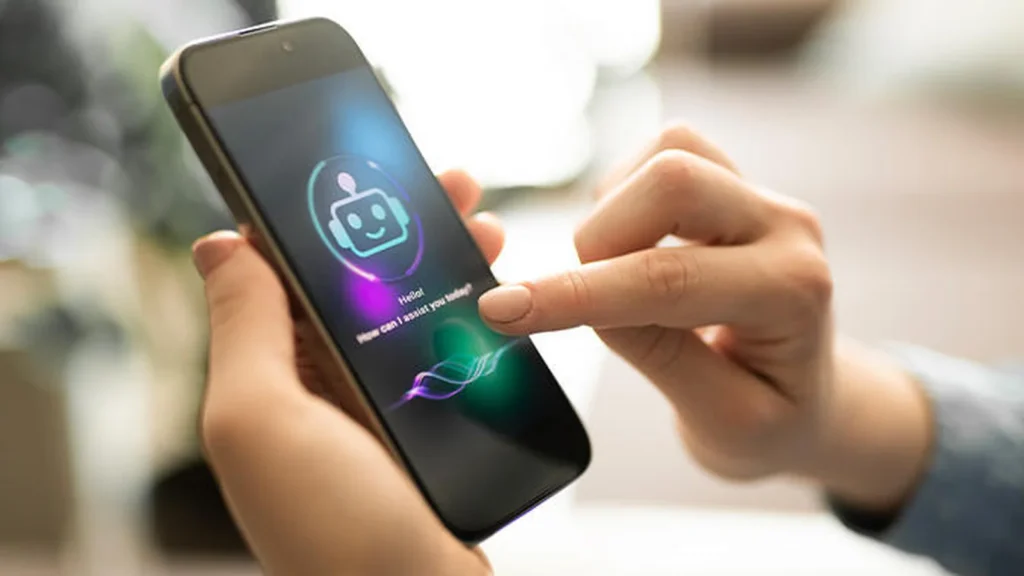
Your phone can now hold a full AI assistant inside it, no internet connection required. Small language models, the compact cousins of ChatGPT and Gemini, have shrunk to the point where they run entirely on a smartphone processor, answer in under a second, and keep every prompt on the device. In November 2026 alone, Google confirmed its Gemini Nano model is running on more than 140 million devices, Alibaba open sourced a 300 million parameter model built to live inside a shopping app, and researchers at the University of Washington showed an automated factory that builds a custom small model for your exact phone.

This is not a lab demo. You can download a free app today, install a 2 to 4 billion parameter model, switch on airplane mode, and chat with it. This article explains what small language models are, which ones are already built into your phone, which open models you can install yourself, and what on device AI is genuinely good at heading into 2027.
Share:
What Is a Small Language Model?
A small language model, or SLM, is a language model with roughly 300 million to 4 billion parameters that is small enough to run on a phone, laptop or single graphics card instead of in a data center. The direct answer to why that matters: an SLM trades some general knowledge for speed, privacy and zero running cost, and for short everyday tasks it is now good enough that most users cannot tell the difference from a cloud model.
The numbers explain the shift. Google publishes reproducible benchmarks for its Gemma 4 E2B model, a 2 billion parameter class model designed for phones. On a Galaxy S26 Ultra it writes at 52.1 tokens per second using the GPU, with the first word appearing after 0.3 seconds, and the model file is 2,583 MB. On an iPhone 17 Pro it reaches 56.5 tokens per second. Those speeds come from aggressive quantization, a compression technique that mixes 2, 4 and 8 bit weights so the model fits in phone memory. The model supports up to 32,000 tokens of context, though longer context uses more memory and generates more heat.
A concrete example shows how far the small end has come. On 6 November 2026, Alibaba’s MNN team at Taobao open sourced MNN-Pocket-0.3B, a model of about 300 million parameters packaged at 173 MB in INT4 format, built to live inside a large shopping app. The team reports about 350 tokens per second on an iPhone 18 Pro and about 0.3 percent battery drain for 100 runs on a OnePlus 13. That is a useful assistant running inside an app you already have, not a separate AI product. The practical takeaway: if a task needs short answers, summarization or extraction, a small model on the device is now the fastest and most private way to do it.
The Models Already Built Into Your Phone
The easiest on device AI is the kind you never install: both Apple and Google now ship a language model as part of the operating system, and apps can call it directly. If you own a recent iPhone or Android phone, you probably already carry one.
On Android, Google’s model is Gemini Nano, which runs in a system service called AICore. Google says Gemini Nano is running on more than 140 million devices, and its latest version, Gemini Nano 4, is built on the architecture of the Gemma 4 model and tuned for battery life and performance. Support depends on the version: nano-v4 covers the Pixel 11 family and the Galaxy Z Flip8, Z Fold8 and Z Fold8 Ultra; nano-v3 covers the Pixel 9 and 10 families, the Galaxy S26 family and the OnePlus 15; nano-v2 covers the Galaxy Z Fold7, OnePlus 13 and Xiaomi 15. Developers reach Nano through the ML Kit Prompt API, which keeps input under 4,000 tokens, about 3,000 English words.
On iPhone, Apple’s third generation of Foundation Models, announced in June 2026, has two on device members. AFM 3 Core is a 3 billion parameter model for everyday tasks. AFM 3 Core Advanced has 20 billion parameters, but its design is unusual: the full model sits in flash storage and only 1 to 4 billion parameters load into working memory at a time, chosen for each request. Apple’s support page lists iPhone 15 Pro, iPhone 16 and later for Apple Intelligence under iOS 27, needing up to 8 GB of storage, or up to 14 GB on iPhone 17 Pro models, iPhone Air and iPhone Duo. Developers reach these models through Apple’s Foundation Models framework, which handles summarizing and extraction on device and points to Private Cloud Compute for harder reasoning.
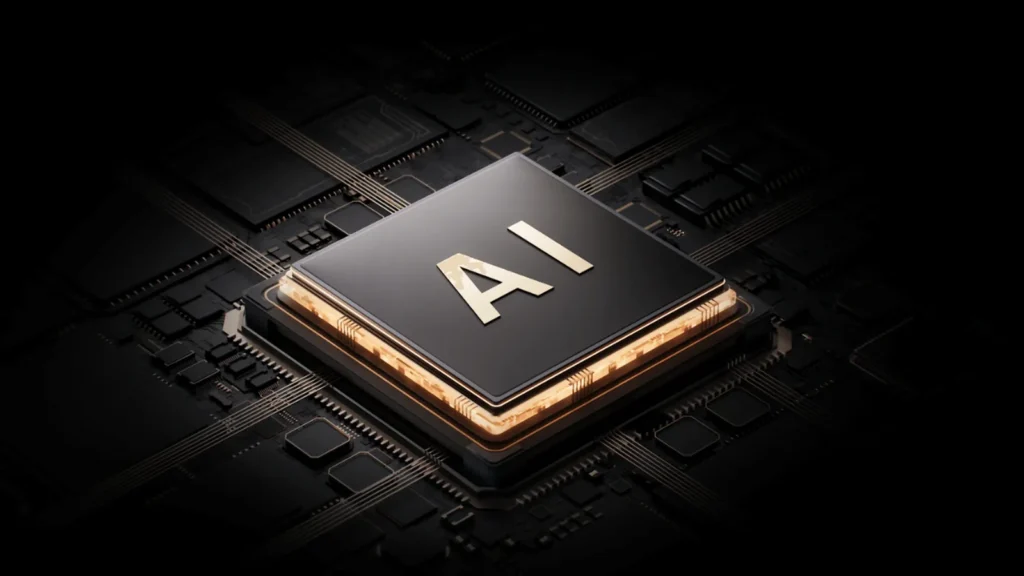
The takeaway for users is simple: before you install anything, check what your phone already has. The built in model costs no download, no storage beyond what the system already uses, and no battery penalty from a second AI app. If you want to understand the chips making this possible, read our guide to AI hardware innovations and next gen chips for local AI PCs.
The Open Models You Can Install Yourself
If you want to choose your own model instead of using the one your phone maker picked, the open route is now genuinely easy: install a free app, download a model file, and chat offline. The three models to start with in late 2026 are Gemma 4 E2B, Qwen3.5-4B and LFM3-1.7B, all of which fit most current phones.
Four apps dominate this space, and all were actively updated in November 2026. PocketPal AI, open source under the MIT licence, runs any GGUF model through llama.cpp on Android and iOS and reached version 1.23.0 on 10 November 2026. Google AI Edge Gallery, Apache 2.0 licensed, is Google’s showcase for on device models with chat, photo questions, audio transcription and a prompt lab, and reached version 1.0.23 on 4 November 2026. Locally, the iPhone companion to LM Studio, runs models in Apple’s MLX format and added Liquid’s LFM 3 models in its 4 November release; its App Store privacy label reads “Data Not Collected”. SmolChat, an open source Android app from Hugging Face, reached version 17 on 1 November 2026.
A practical example: install Google AI Edge Gallery on Android and download Gemma 4 E2B, or install PocketPal AI and grab a 4 bit GGUF of Qwen3.5-4B. Both run fully offline once downloaded. For larger models, keep them on a computer at home and reach them from your phone over a private network. The takeaway: start with Gemma 4 E2B for the easiest experience, and move to Qwen3.5-4B when you want stronger reasoning. Our guide to running DeepSeek and Llama models locally on a low end PC covers the home server side of the same setup.
What On Device AI Is Actually Good At in 2027
On device AI wins on short, frequent and private tasks, and loses on long documents and hard reasoning. That is the honest answer, and it matches how Apple and Google build their own platforms: quick work stays on the phone, anything needing more than about 3,000 words of context goes to the cloud.
The strengths are concrete. Summarizing a message thread, rewriting a reply in a friendlier tone, extracting dates and amounts from a receipt photo, transcribing a voice memo, and answering questions about a photo are all tasks where a 2 to 4 billion parameter model is fast and accurate. Google’s own guidance for the ML Kit Prompt API draws the line at 4,000 tokens of input, and Apple’s Foundation Models framework shares a 4,096 token window between input and output in iOS 27. Inside those budgets, responses arrive in well under a second.
The limits are just as concrete. The model card for MNN-Pocket-0.3B warns against advanced math and long code generation, and the same caution applies to every model in this size class. Long form writing, multi step planning and research across many sources still belong in the cloud. A useful case study comes from the University of Washington’s Mobile AI Factory, released in November 2026 as arXiv paper 2611.13509: an agentic pipeline that fine tunes and quantizes a small model per task and per Android phone, then benchmarks it on the real handset. Across 10 tasks and 4 Android phones, the factory’s small models beat five shot frontier models on 5 tasks and matched them on 3. The lesson is that a small model tuned for one job beats a giant generalist on that job. The takeaway: match the model to the task, and keep one cloud assistant for the work that needs depth.
Privacy: The Real Reason to Go On Device
Privacy is the strongest argument for on device AI, and it is the one advantage cloud models can never match: when the model runs on your phone, your prompts never leave your hands. There is no server log, no data retention policy to trust, and no network request for anyone to intercept.
The difference is structural, not a promise. A cloud chatbot sends every message to a company server, where it may be logged, reviewed or used for training under terms you accepted long ago. An on device model processes text in your phone’s memory and discards it when you close the app. That matters most for health notes, financial messages, work documents and anything involving children. Apple’s Private Cloud Compute exists precisely because Apple knows some requests must leave the device, and it designed that path so the server cannot retain the data. Google’s AICore takes a similar approach with on device processing as the default.
A real world example makes the stakes clear. Locally, the iPhone app from LM Studio’s developer Element Labs, carries an App Store privacy label of “Data Not Collected”, which is only possible because nothing leaves the phone. Compare that with any cloud AI app, whose privacy label lists the data it collects. The takeaway: if you would not paste it into a search box, do not paste it into a cloud chatbot either. Run it on device instead. For more tools that work with no connection at all, see our roundup of the best offline AI tools that work without an internet connection.
What Changed in November 2026
November 2026 was the month on device AI stopped being a hobby and became a platform. Four developments in the first two weeks of the month show how fast the field is moving.
First, Alibaba’s MNN team open sourced MNN-Pocket-0.3B on 6 November, proving that a useful assistant can ship inside an ordinary app at 173 MB. Second, the University of Washington released Mobile AI Factory, an agentic system that automates the hardest part of shipping small models: fine tuning for a specific task and quantizing for a specific phone, verified with real benchmarks on real handsets. Its code is public at github.com/evanly-gh/SLM_Factory. Third, every major phone LLM app shipped an update in the first ten days of November, including PocketPal AI 1.23.0 and Google AI Edge Gallery 1.0.23. Fourth, Google confirmed Gemini Nano has passed 140 million devices, which means on device AI is now the default experience for a large share of Android users, not an experiment.
The practical takeaway: if you tried phone AI a year ago and found it slow or useless, try again. The models, the apps and the chips have all moved a generation. The open source side of this story keeps growing too, and our guide to the top open source alternatives to ChatGPT Plus that run locally covers the desktop side of the same movement.

The Bottom Line
Small language models on smartphones are no longer a compromise. In 2027, a 2 to 4 billion parameter model on your phone writes at 50 plus tokens per second, answers in under a second, works in airplane mode, and keeps your data private. Google’s Gemini Nano is already on more than 140 million devices, Apple’s Foundation Models framework puts a 3 billion parameter model in every recent iPhone, and open models like Gemma 4 E2B and Qwen3.5-4B are one free download away.
Start with what your phone already has, then try PocketPal AI or Google AI Edge Gallery with a small open model. Keep the cloud for long research and hard reasoning. For everything short, frequent and private, the model in your pocket is now the better tool.
Don’t Miss These, Explore More Topics