Top 15 Open-Source GitHub Repositories for AI Agents & Automation
GitHub is where the free alternatives to your paid AI subscriptions actually live: the automation platform, the agent framework, the local AI runner, the browser automation library. The problem is finding the repositories that matter among the millions that do not. This list ranks fifteen open source GitHub repositories for AI agents and automation by usefulness to a working developer or builder in 2026, not just by star count, though star counts are given where available so you can see how widely each project is used.

Star counts below are snapshots read from each repo GitHub page in early November 2026, and they move daily. Licenses differ by project, and one entry on this list is fair code rather than standard open source, so check each repo license before commercial use.
Quick Comparison: 15 Repos at a Glance
| Repository | Main Focus | Language | Best For |
|---|---|---|---|
| n8n | Workflow automation with AI | TypeScript | Automating work without Zapier fees |
| LangGraph | Stateful agent orchestration | Python | Controlled multi step workflows |
| CrewAI | Multi agent teams | Python | Coordinated specialist agents |
| AutoGen | Multi agent conversation | Python, C# | Learning agent patterns |
| OpenHands | AI software engineer | Python, TypeScript | Coding and repository tasks |
| Dify | Visual AI app platform | Python, TypeScript | Shipping chatbots with less code |
| browser-use | Browser automation for agents | Python | Automating web tasks |
| OpenClaw | Personal AI agent | TypeScript | An always on agent on your machine |
| Aider | Command line pair programmer | Python | AI coding in the terminal |
| MetaGPT | Multi agent software company | Python | Turning requirements into code |
| AutoGPT | Autonomous agent pioneer | Python, TypeScript | Learning agent history and design |
| PydanticAI | Typed Python agents | Python | Structured, type safe agent code |
| Agno | Agent framework and runtime | Python | Building and operating agent systems |
| Mastra | TypeScript agents | TypeScript | Agents in JavaScript apps |
| Claude-Mem | Persistent agent memory | TypeScript | Agents that remember your work |
Share:
1. n8n (n8n-io/n8n)
n8n is a workflow automation platform with native AI capabilities, and the repo on this list most likely to replace a subscription this month. You build automations visually, drop into custom code where you need to, and either self host it or use the cloud version. It is built for automating posting, lead handling, email and AI agent workflows without Zapier or Make fees, and it has native AI agent nodes that connect to any model.
License caveat, read this before commercial use: n8n is fair code under the Sustainable Use License, not standard open source. Self hosting for your own use is free, but there are restrictions on offering it as a hosted service to others. It had over 209,000 stars in early November 2026.
2. LangGraph (langchain-ai/langgraph)
LangGraph is a low level orchestration framework for building stateful agents and long running workflows. Where simpler frameworks run a straight chain of steps, LangGraph lets you build cycles, branches and human checkpoints, with state that persists across steps. It is the strongest choice when your agent needs explicit control: a human approves a step before anything irreversible happens, and the workflow can loop, retry and recover.
LangGraph is MIT licensed, built by the LangChain team, and widely used in production agent systems. If you are building an agent that does real work with real consequences, start here.
3. CrewAI (crewAIInc/crewAI)
CrewAI is a lean, Pythonic framework for orchestrating role playing autonomous agents. You define specialised agents with explicit roles, tools and tasks, and CrewAI coordinates them through structured workflows with delegation. One agent researches, another writes, a third reviews, and the framework handles the handoffs.
CrewAI excels at structured workflow execution and is one of the most approachable multi agent frameworks for Python developers. It is MIT licensed and actively developed.
4. AutoGen (microsoft/autogen)
AutoGen, from Microsoft, is a flexible multi agent conversation framework where agents converse with each other, execute code in isolated sandboxes, and integrate human feedback into the execution loop. It was one of the most influential agent frameworks of the last two years, and its conversation based design shaped how many later frameworks work.
Status note: AutoGen is in maintenance mode, and Microsoft directs new users toward Microsoft Agent Framework. AutoGen remains valuable for learning agent patterns and for existing projects, but start new work on the successor framework.
5. OpenHands (All-Hands-AI/OpenHands)
OpenHands, formerly OpenDevin, is an open source autonomous AI software engineer. Its agents can work with code, run commands in a terminal environment, browse relevant information, fix bugs and draft pull requests. It is the closest open source equivalent to a full AI coding agent, and it is designed to do real software engineering tasks rather than just answer questions about code.
OpenHands is MIT licensed and one of the most active agent repositories on GitHub. It pairs well with local models if you want to keep your code private.
6. Dify (langgenius/dify)
Dify is a visual platform for building AI applications: chatbots, agents, workflows and knowledge apps, with far less custom orchestration code than a framework requires. You design the workflow visually, connect your models and data sources, and deploy. It is the fastest route from an idea to a working support bot or lead bot that a non developer can maintain.
Dify is licensed under Apache 2.0 with additional conditions, and it had over 160,000 stars in early November 2026. Read the license terms before commercial use.
7. browser-use (browser-use/browser-use)
browser-use connects AI agents to real browser interaction. Rather than only describing what a person should click, a suitably configured agent can use browser controls to navigate pages and work through web based tasks: research, form filling, data extraction and repetitive browser work. It is MIT licensed and had over 119,000 stars in early November 2026.
Browser automation is one of the fastest growing agent use cases, and browser-use is the library most new projects in this space build on.
8. OpenClaw (openclaw/openclaw)
OpenClaw is an open source personal AI agent that runs on your own machine, always on, and connects to messaging apps like WhatsApp, Telegram and Slack. It is the open source answer to the closed personal agent products launched by the big labs in 2026, with the model, the computer and the data on your side of the line. It is MIT licensed and had over 393,000 stars in early November 2026, making it one of the most starred AI repositories on GitHub.
9. Aider (paul-gauthier/aider)
Aider is a command line AI pair programmer that edits code in your Git repository directly, with automatic commits and sensible messages. It works with local models through Ollama and with cloud models, and it is famously good at working with existing codebases. For developers who live in the terminal, Aider is the most productive agent on this list.
Aider is Apache 2.0 licensed. Our guide to lightweight AI coding assistants for 8GB RAM laptops covers Aider in more depth, including the local models that pair well with it.
10. MetaGPT (geekan/MetaGPT)
MetaGPT is designed around real world software company processes. Give it a one line requirement and it generates user stories, competitive analysis, system architecture and complete code, with agents playing the roles of product manager, architect, project manager and engineer. It is MIT licensed and one of the earliest multi agent frameworks to show what role based agent teams can do.
11. AutoGPT (Significant-Gravitas/AutoGPT)
AutoGPT is one of the pioneering open source projects that gave language models autonomy over web search, file management and code execution. It sparked the entire agent wave in 2023, and while newer frameworks have passed it in practical terms, it remains an essential repo for understanding agent design, and its newer versions include a visual agent builder.
AutoGPT is MIT licensed. Study it for the ideas, build production work on LangGraph or CrewAI.
12. PydanticAI (pydantic/pydantic-ai)
PydanticAI is a Python agent framework from the team behind Pydantic, built around typed tools and structured results. If you care about type safety, validation and clean Python code, PydanticAI gives you agents that fit naturally into a typed codebase, with the same validation guarantees Pydantic is known for. It is MIT licensed.
13. Agno (agno-agi/agno)
Agno, formerly Phidata, is a framework and runtime for building and operating agent systems, including multi agent teams, with built in monitoring and evaluation. It is designed for developers who want to run agents in production, not just demo them, with attention to performance and observability. It is MPL 2.0 licensed.
14. Mastra (mastra-ai/mastra)
Mastra is the TypeScript answer to the Python agent frameworks: a framework for building agents, workflows and AI applications in JavaScript and TypeScript. If your stack is Node.js and you want agents that fit your existing codebase, Mastra is the natural choice. It is MIT licensed and actively developed.
15. Claude-Mem (thedotmack/claude-mem)
Claude-Mem is the fastest growing repository on this list and the newest idea: persistent memory for AI coding agents. It gives Claude Code a memory layer, so the agent remembers your project, your decisions and your conventions across sessions instead of starting from zero every time. It passed 109,000 stars in November 2026 and was gaining over 1,500 stars a day at one point, which tells you how much developers want agents that remember.
Claude-Mem is the clearest sign of where agent infrastructure is heading in 2026: the race is no longer only about which model is most capable, but about persistence, memory, security and team coordination around the model.
How to Choose the Right Repo
- Automate business workflows without code: n8n or Dify.
- Build a production agent with human checkpoints: LangGraph.
- Coordinate a team of specialist agents: CrewAI or Agno.
- Automate browser tasks: browser-use.
- AI coding in your terminal: Aider or OpenHands.
- Agents in a TypeScript stack: Mastra.
- A personal agent on your own machine: OpenClaw.
- Agents that remember: Claude-Mem.
The Shape of a Trustworthy Agent
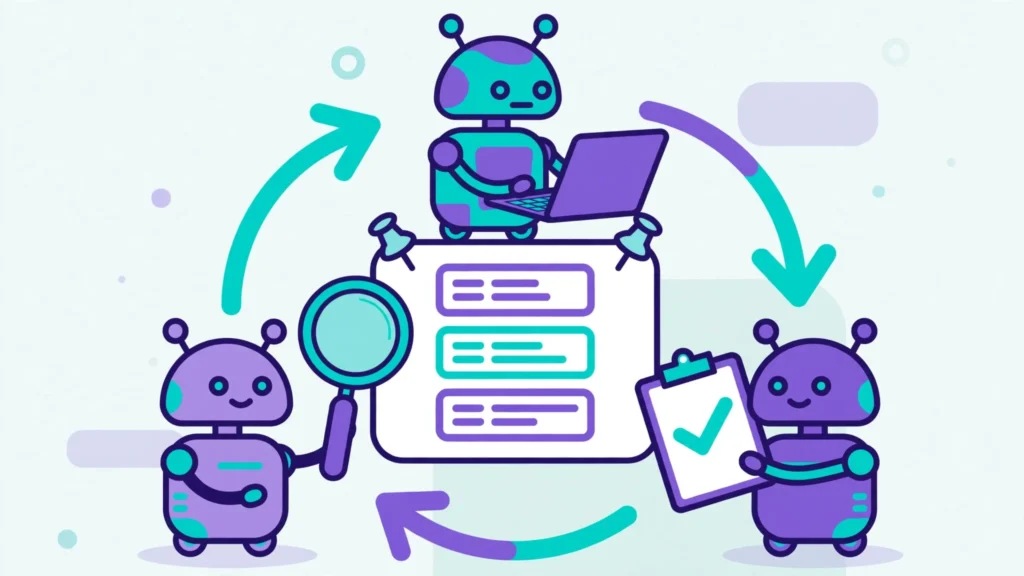
Across all fifteen repos, the same design lessons keep appearing. Give agents narrow tools, put a human gate before anything irreversible, keep a replay set that tells you when a prompt has drifted, and log everything. The frameworks make agents easy to build, but the trust comes from the guardrails you put around them. If you are starting from scratch, our guide on how to automate Google Sheets using free AI agents shows the same principles applied to a no code workflow.
Conclusion
The open source agent ecosystem in 2026 has matured from demos into infrastructure: orchestration in LangGraph, automation in n8n, browser control in browser-use, memory in Claude-Mem, and personal agents in OpenClaw. Star the repos that fit your stack, clone one this week, and build something small. The best way to learn agents is to run one against a real workflow and watch what it does, and every repo on this list is free to try.
Don’t Miss These, Explore More Topics